
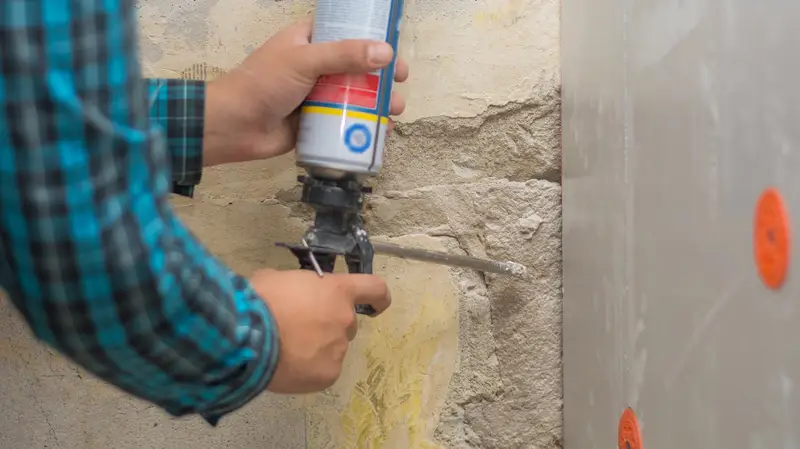
Spray adhesive seems easy—just point, spray, and press, right? But have you ever used a top-brand product only to have your project fall apart? Don't get discouraged. You've likely just run into a few common spray adhesive mistakes that trip up most beginners. Don't worry, we're here to guide you past them so you can get a professional result, every single time.
Mistake 1: Being Too Eager and Skipping Surface Prep
What It Looks Like: The bond seems to hold at first, but after a short while, it peels apart. Spray adhesive not sticking. You notice the adhesive layer is stuck to a film of dust, not the material itself.
Why It Happens: Imagine trying to tape two pieces of paper together with a layer of sand in between. The adhesive is bonding to the loose dust and oils, not the actual surface. The strength of the bond is compromised from the start.
How the Pros Do It: Before you start, always wipe the surfaces with a clean, dry cloth. If there’s any grease or oil (common on plastics and metals), clean it with rubbing alcohol or a degreaser, and then wait for it to dry completely. This single step is responsible for more than half of your success.
Mistake 2: Spraying "By Feel"—Either Too Close or Too Far
What It Looks Like:
- Too Close: The adhesive pools into wet, bubbly puddles. It soaks through your material and takes long time to dry.
- Too Far: The spray comes out like a fine, dusty web that barely has any stickiness.
Why It Happens: The atomization of the spray is key. Too close, and the solvents can't evaporate, causing the glue to puddle. Too far, and the adhesive particles practically dry in mid-air, losing their bonding power before they even land.
How the Pros Do It: Remember the golden distance: 6-8 inches (or 15-20 cm) away from the surface. Use a steady, sweeping motion, just like you’re spray-painting. Not sure you've got the feel? Do a quick test spray on a piece of scrap cardboard first.
Mistake 3: Being Impatient! Sticking It Together Instantly
What It Looks Like: You press the two surfaces together, but they just slide around. Wet glue oozes out the sides, creating a huge mess.
Why It Happens: Spray adhesive needs a moment to "breathe." This allows some of the solvents to evaporate, letting the adhesive reach its optimal "tacky" state. If you press immediately, you trap wet solvents inside, which severely weakens the bond.
How the Pros Do It: After spraying, give it some time. Spray adhesive drying times vary. Wait for 30 seconds to a minute. The best way to test if it's ready? Lightly touch a corner of the glued surface with your knuckle. If it feels sticky but doesn't transfer to your skin, it's the perfect time to bond.
Mistake 4: Taking the DIY Spirit Too Far by Using the Wrong Glue
What It Looks Like: You used your craft adhesive to fix your car's sagging headliner. It worked for a week, but the first hot summer day, the fabric came peeling down again.
Why It Happens: It's like using scotch tape to fix a leaky pipe—it's the wrong tool for the job. Different spray adhesives have vastly different formulas. Their strength, temperature resistance, and moisture resistance are engineered for specific scenarios.
How the Pros Do It: Refer back to the first two parts of our guide. A simple rule: “use the right tool for the right job”. Use craft spray for paper and fabric. Use all-purpose or heavy-duty for wood and metal. And for challenging environments like cars or bathrooms, always invest in a specialty adhesive designed to handle the heat or moisture.
Mistake 5: "Powering Through" in a Closed Room
What It Looks Like: You're just fixing one small thing, but soon the whole room harsh smells, and you start to feel a bit dizzy.
Why It Happens: As a chemical product, spray adhesive releases Volatile Organic Compounds (VOCs) as it dries. In an unventilated area, these fumes can become concentrated and are unhealthy to breathe.
How the Pros Do It: Safety always comes first! If possible, work outside or on a balcony. If you must work indoors, open all windows and doors and use a fan to create cross-ventilation. For larger projects, we strongly recommend wearing a proper respirator mask.
We hope this guide on common spray adhesive mistakes helps you optimize your production process, improve efficiency, and reduce costs. Using spray adhesives correctly not only ensures product quality but is also key to avoiding potential risks.
However, every application is unique. If you encounter other challenges not mentioned in this article during your operations, or if you have any questions about your current process, please feel free to contact our technical experts. We are happy to provide you with one-on-one assistance.
More importantly, please remember that spray adhesive is not a universal solution. When your substrates, processes, or performance requirements exceed the capabilities of spray adhesives, forcing its use will only be counterproductive. In such cases, changing your approach and adopting other application methods—such as roll coating, scrape coating, or PUR hot melts—may be the smarter choice.
Fokis is not just an adhesive supplier; we are your application solutions partner. If you are looking for an alternative or need an adhesive customized for your specific requirements, our professional team can conduct an evaluation and tailor the most efficient and cost-effective solution for you.