
Adhesives for furniture production
Foam & Upholstery
Adhesive Solutions
For sofa, seating and upholstered furniture production.
Explore water-based and solvent-based spray adhesives for foam-to-foam, foam-to-fabric and foam-to-wood bonding. Match the materials and production process, then confirm the choice with a practical trial.
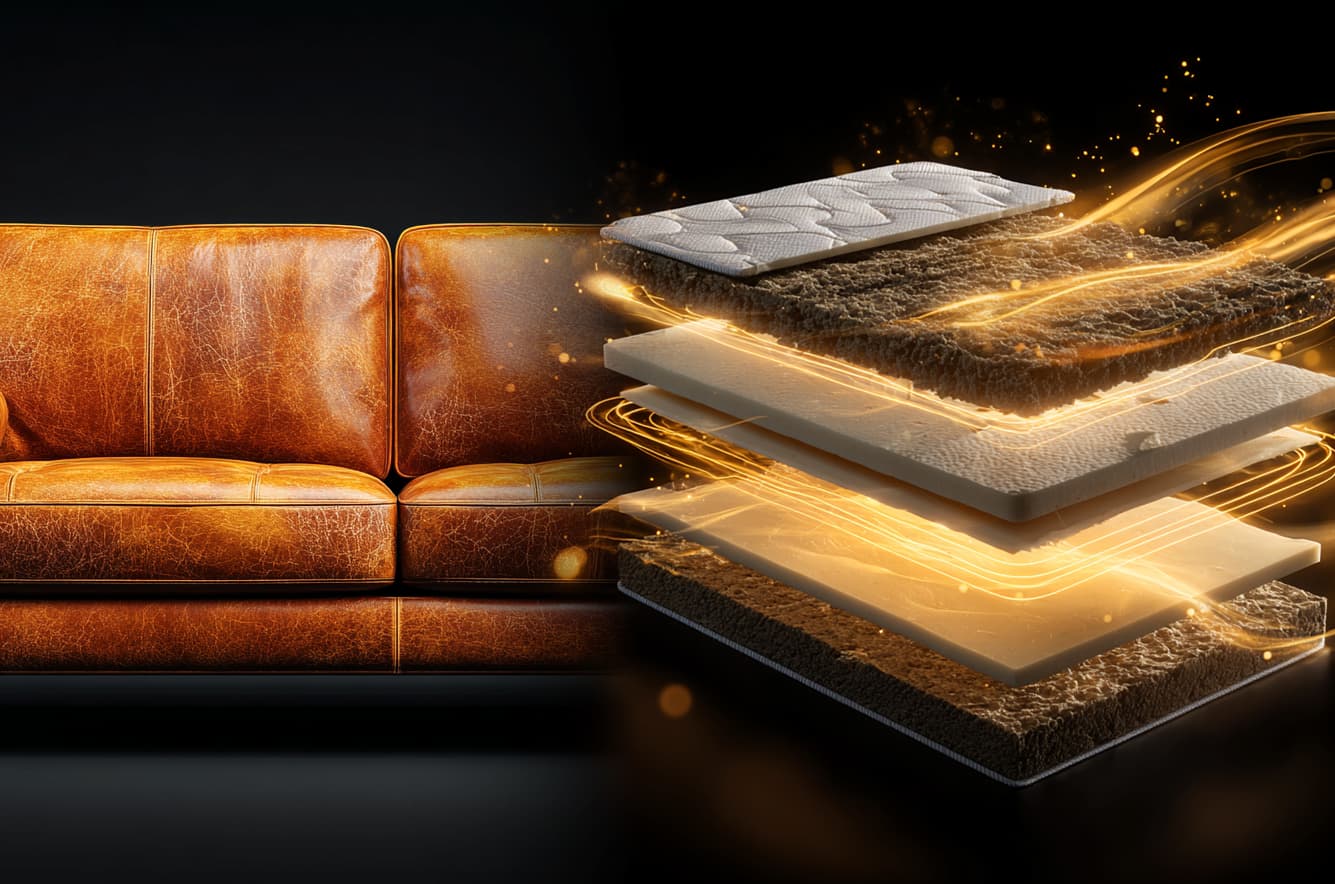
Your materials. A tested starting point.
Confirm the bond before moving to production.
From the finished part to the bond
Built around what you make.
Choose your furniture application, then identify the two surfaces that need to hold together.
Sofas & upholstered furniture
Cushions, arms and curved upholstery parts.
Office chairs & seating
Seat pads, backrests and shaped cushions.
Upholstered furniture parts
Headboards, padded panels and individual parts.
APPLICATION FOCUS
Cushions, arms and curved upholstery parts.
For curved arms and wrapped edges, identify the foam, covering and frame surface. Bring any spring-back or positioning problem into the trial.
APPLICATION FOCUS
Office chairs & seating
For shaped seat pads and backrests, check the actual foam surface and supporting material. Assess contact on curves, fabric appearance and the finished feel. Plastic shells need separate compatibility evaluation.
APPLICATION FOCUS
Upholstered furniture parts
For headboards and padded panels, identify the covering, foam and backing surface. Check uniform contact, edge wrapping and whether adhesive affects the visible face or feel.
MATERIAL PAIR
What are you bonding?
Select the closest combination. Final suitability depends on the actual grades and surface finishes.
Foam to Foam
Cushion layers, shaped foam and upholstered components.
Foam to Fabric
Upholstery textiles, backed fabrics and soft coverings.
Foam to Wood
Seat bases, sofa frames and wooden upholstery parts.
For foam-to-foam bonding
Share both foam grades and the shape of the part. Check the bond line’s flexibility, positioning time and response to compression.
For foam-to-fabric bonding
Share the fabric backing or coating as well as the foam grade. Assess bond coverage, appearance and hand feel on the actual materials.
For foam-to-wood bonding
Identify the wood or board surface and any finish. Include the real curves and wrapped edges when assessing early hold and contact pressure.
Making mattresses? Explore the application overview for mattress assembly and packing considerations.
Match your production
Adhesive selection starts with your production issue.
Two factories can use similar foam and still need a different trial. Start with the bottleneck on your line.
Bring one clear production problem to the discussion. It gives the trial a useful target.
01
Parts spring back before they hold?
Review initial tack, the assembly window and how pressure is applied to curves and wrapped edges.
02
The finished cushion feels too stiff?
Look at adhesive flexibility and coating amount. Assess the feel of the finished part after drying.
03
Adhesive showing through the fabric?
Check the fabric backing, coating amount and spray pattern. Inspect appearance and hand feel on your actual fabric after drying.
04
Uneven coverage or drying that slows the line?
Review initial tack, the assembly window and how pressure is applied to curves and wrapped edges.
Options to evaluate
Water-based & solvent-based
upholstery adhesives.
Review a water-based or solvent-based route with Fokis. Confirm the fit on your actual foam, fabric or wood.
Compare the route before the grade.
Use these questions to plan the trial. Performance and working times must be confirmed for the individual product.
| Selection point | Water-based spray adhesive | Solvent-based spray adhesive |
|---|---|---|
| Your spray setup | Confirm that the equipment and cleaning procedure suit the chosen formula. | Confirm the spray pattern, equipment compatibility and required handling controls. |
| Assembly timing | Trial the readiness-to-bond window under your actual temperature, humidity and airflow. | Trial drying and positioning time on the real part, including any curved or tensioned edges. |
| Finished component | Assess hold, flexibility, fabric appearance and readiness for handling or packing. | Assess foam compatibility, hold, flexibility and fabric appearance after drying. |
| Before changing over | Review product instructions and SDS. Agree on process adjustments and trial criteria. | Review product instructions and SDS, including ventilation and ignition precautions. |
CANDIDATE PRODUCTS
Discuss these starting points with Fokis against your material and process requirements.
Water-based spray adhesive
Water-based
Fokis WO-727
An option to discuss when reviewing a water-based upholstery process.
Why include it in the discussion?
Fokis lists WO-727 as a water-based, low-flammability option for foam and upholstery applications.
What should the trial confirm?
Material compatibility, spray setup, drying conditions and the available assembly window.
Bring to the enquiry
Your current application method, material samples and the reason for considering a water-based system.
Solvent-based spray adhesive
Solvent-based
Fokis 893
A furniture spray adhesive to evaluate for foam, fabric and wood bonding.
Why include it in the discussion?
Fokis identifies 893 for furniture and upholstery manufacturing, including PU foam bonded to wood frames or fabric.
What should the trial confirm?
Your spray equipment, positioning time and any spring-back, coverage or finishing problems.
Bring to the enquiry
Your current application method, material samples and the reason for considering a water-based system.
Fokis industrial spray adhesive performance testing
Validate before production
Application testing
& sample evaluation.
Agree on what the trial needs to demonstrate. Assess the bond on your materials, then check the finished upholstery part under the conditions relevant to its use.
Observe both the bond and the separated surfaces.
Agree on the test method and acceptance criteria for your materials. This diagram does not represent a measured result.
01
Define the material pair
Identify both surfaces, foam grade, fabric backing and the production issue you want to solve.
02
Record the application conditions
Track adhesive amount, spray setup, drying time, workshop conditions and assembly pressure.
03
Assess the dried bond
Record separation behaviour, flexibility and, where agreed, measured bond strength after the specified drying or curing period. Foam tear alone is not a universal pass criterion.
04
Try the real upholstery part
Include curves, wrapped edges and relevant compression. Agree on any additional heat or aging evaluation from the actual use and transport requirements.
Confirm sample quantities and receiving arrangements before shipping.
A useful trial record includes
Material grades
Adhesive & batch
Test conditions
Coating & assembly
Results & observations
Agreed criteria
Document what was tested and what still needs confirmation before production.
Before your first trial
Foam & upholstery
adhesive FAQs.
Useful things to clarify before changing adhesive or adjusting your upholstery process.
How do I choose between water-based and solvent-based adhesive?
Start with the materials and production conditions. Compare application equipment, drying time, early holding strength, finished feel and handling requirements. Evaluate the candidate product on your own components.
Why do curved foam parts spring open?
Foam rebound can exceed the early holding strength of the bond. Review assembly timing, adhesive coverage and pressure together. A flat test piece may not reproduce a tightly wrapped edge.
Can the same adhesive work with every upholstery fabric?
Do not assume that it will. Backings, coatings and finishes change the bonding surface. Supply the actual fabric and check bonding, appearance and feel on a representative sample.
How can we assess a switch to water-based adhesive?
Start with the existing production cycle and a candidate formula. Confirm equipment requirements, then record spray coverage, readiness-to-bond time, early hold and finished-part performance under your workshop conditions. Agree on any process changes before scaling up.
Why might adhesive show through thin upholstery fabric?
Possible factors include the fabric construction or backing, coating amount and spray pattern. Use the actual fabric to compare appearance, bonding and hand feel after drying. Do not assume one cause or a universal fix.
What information should I send for an initial discussion?
Send the two materials, the finished component, your application method and the main problem. Photos and material specifications are useful. Confirm sample arrangements with Fokis before dispatch.
Tell us what needs to hold.
Share your material pair and one production challenge. Start a discussion about a suitable product trial.