
Published: October 2025 | Last updated: May 2026
Industrial SBS spray adhesives are widely used in furniture, mattress, upholstery, and automotive interior production. These solvent-based adhesives provide fast initial tack and flexible bonding for foam, fabric, leather, and other flexible materials.
This guide explains how SBS spray adhesives work, where they are commonly used, what advantages and limitations should be checked before production, and how to apply them correctly on an industrial line. It is written from a practical manufacturer perspective, so the focus is not only on adhesive chemistry, but also on real production issues such as open time, spray amount, odor, ventilation, substrate compatibility and bonding stability.
Quick Answer: What Are Industrial SBS Spray Adhesives?
Industrial SBS spray adhesives are solvent-based adhesives made with SBS, or styrene-butadiene-styrene block copolymer. They are commonly used for bonding flexible materials such as PU foam, sponge, fabric, leather, carpet and nonwoven materials. Their main advantages are fast initial tack, a flexible bond line and adjustable open time, making them suitable for upholstery, mattress, furniture, automotive interior and general assembly production.
| Item | Practical Meaning |
|---|---|
| Adhesive Type | Solvent-based spray adhesive based on SBS polymer. |
| Main Bonding Feature | Fast initial tack with a soft and flexible bond line. |
| Common Materials | PU foam, sponge, fabric, leather, carpet, nonwoven fabric, insulation materials and flexible substrates. |
| Typical Industries | Sofa manufacturing, mattress production, upholstery, automotive interiors, luggage, office furniture and exhibition decoration. |
| Main Process Advantage | Quick positioning and efficient spray application for manual, semi-automatic and industrial production. |
| Key Safety Point | Requires good ventilation, fire safety control and material compatibility testing. |
What Are SBS Spray Adhesives?
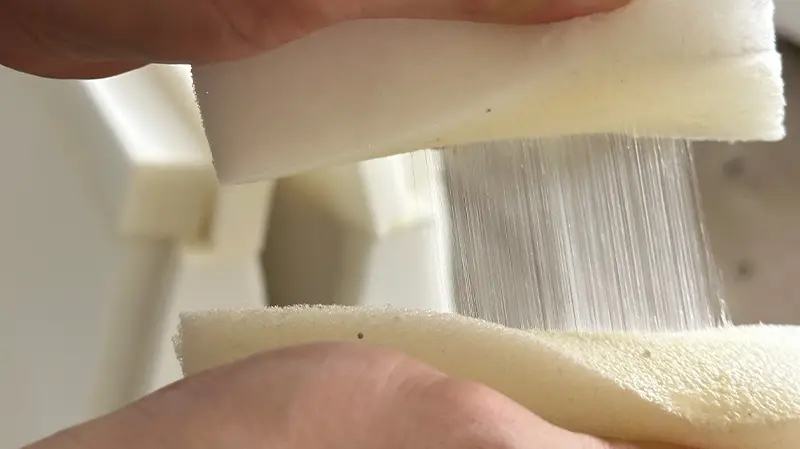
SBS spray adhesive, often called solvent-based spray adhesive or oil-based spray adhesive in some markets, is an industrial adhesive designed for fast and flexible bonding. It is usually applied by spray gun, which makes it efficient for covering large surfaces such as foam sheets, upholstery layers, mattress components and fabric-backed materials.
After spraying, the solvent carrier evaporates and leaves the adhesive film on the surface. When the coated materials are pressed together at the right tack stage, the adhesive creates a fast bond with a flexible film. This is why SBS spray adhesive is commonly used in industries where soft materials need to keep their original feel after bonding.
Typical bonding substrates include PU foam, sponge, fabric, leather, synthetic leather, carpet, nonwoven fabric, insulation materials and other flexible substrates. However, because it is solvent-based, substrate compatibility, ventilation, fire safety and final odor should always be checked before large-scale production.
How SBS Spray Adhesive Works
The performance of SBS spray adhesive comes from the structure of SBS, which stands for styrene-butadiene-styrene. It is a block copolymer with both hard and soft segments.
The styrene segments help provide cohesion and strength. The butadiene segments give the adhesive film flexibility and rubber-like elasticity. This combination allows the adhesive layer to hold firmly while still moving with soft materials such as foam and fabric.
In real production, this flexibility is important. If an adhesive dries too hard, the finished product may feel stiff, crack during bending, or peel at the edges after repeated compression. A suitable SBS spray adhesive should give both initial tack and long-term flexibility.
Key Advantages of Industrial SBS Spray Adhesives
Industrial SBS spray adhesives remain popular because they solve a common production need: fast assembly of flexible materials. The advantages below are especially important for factories producing sofas, mattresses, upholstery products, automotive interiors and similar goods.
| Advantage | What It Means in Production |
|---|---|
| Strong Initial Tack | Helps foam, fabric, leather and other flexible materials stay in position quickly after bonding, reducing waiting time during assembly. |
| Flexible Bond Line | The adhesive film remains soft and elastic after drying, helping bonded materials bend, compress or recover without cracking easily. |
| Adjustable Open Time | The working time can be adjusted according to different production speeds, bonding areas and assembly methods. |
| Mature Formulation Technology | SBS spray adhesive is a well-established adhesive system with stable performance and broad industrial use. |
| Efficient Spray Application | Spraying helps cover large surfaces quickly and evenly, making it suitable for furniture, mattress and upholstery production. |
Limitations and Safety Points to Check
SBS spray adhesive has strong practical value, but it should be used with proper process control. Because it is solvent-based, factories should pay attention to ventilation, fire safety, odor, application amount and compatibility with sensitive materials.
| Point to Check | Why It Matters | Practical Recommendation |
|---|---|---|
| Ventilation | Solvent-based adhesives release solvent during drying, so poor ventilation may affect worker comfort and safety. | Use in a well-ventilated area and follow local safety requirements for industrial adhesive use. |
| Fire Safety | Many solvent-based adhesives are flammable before drying. | Keep away from sparks, open flames and high-temperature sources during storage and application. |
| Material Compatibility | Some sensitive plastics or foam boards may be affected by solvent contact. | Always test on the actual substrate before mass production, especially for PS foam and delicate plastic materials. |
| Odor Control | Residual odor may affect mattresses, furniture, automotive interiors and other products used close to people. | Check odor after drying and after packaging, not only during the application process. |
| Application Amount | Too much adhesive may increase cost, slow drying and affect the final hand feel. | Control spray amount, spray distance and coating uniformity during production trials. |
Factory note: Do not rely only on a small hand sample. Test the adhesive under real production conditions, including actual spray equipment, drying environment, pressing method and packaging process.
Industrial Applications of SBS Spray Adhesives
SBS spray adhesives are used in many industries because they combine fast tack, flexible bonding and efficient spray application. The most common applications are soft-material bonding processes where both speed and hand feel matter.
| Application Area | Common Materials | Key Adhesive Requirement |
|---|---|---|
| Sofa and Upholstery Manufacturing | PU foam, sponge, fabric, leather, synthetic leather and lining materials. | Fast tack, flexible bond line, easy spray operation and low rework rate. |
| Mattress Production | Foam layers, nonwoven fabric, quilting fabric and comfort layers. | Controlled open time, even spray coverage, soft bond line and acceptable odor after drying. |
| Automotive Interior Decoration | Foam, fabric, carpet, leather, insulation materials and trim components. | Stable bonding, heat resistance, odor control and good aging performance. |
| Luggage and Handbags | Fabric, leather, sponge, lining fabric and decorative layers. | Quick positioning, flexible bonding and no obvious hard spots after bonding. |
| Office Furniture | Foam, fabric, mesh, leather, sponge and molded padding materials. | Flexible bonding, clean operation and stable performance during repeated use. |
| Exhibition and Decoration | Carpet, fabric, board, foam, display materials and temporary decorative substrates. | Fast application, strong initial tack and efficient large-area bonding. |
How to Apply SBS Spray Adhesive Correctly
The correct application process depends on the adhesive grade, substrate, equipment and factory conditions. However, most SBS spray adhesive applications follow the same basic logic: clean the surfaces, spray evenly, wait for the correct tack stage, press firmly and allow enough time for final strength to develop.
| Step | What to Do | Factory Note |
|---|---|---|
| 1. Surface Preparation | Make sure the bonding surfaces are clean, dry and free from dust, oil or loose particles. | Contaminated surfaces are a common reason for weak bonding, especially on fabric-backed or plastic-faced materials. |
| 2. Even Spraying | Use a spray gun and keep a suitable distance from the surface, usually around 15-25 cm depending on equipment and adhesive grade. | Avoid heavy wet spots. Uneven spraying may cause weak areas, slow drying or visible hard points. |
| 3. Tack-Up Time | Wait until the adhesive becomes tacky before bonding. The proper waiting time depends on adhesive grade, temperature, ventilation and coating amount. | If bonded too early, solvent may remain trapped. If bonded too late, initial tack may drop. |
| 4. Bonding and Pressing | Align the materials carefully and press them together firmly and evenly. | For curved foam or wrapped edges, pressure and positioning are just as important as adhesive strength. |
| 5. Curing and Handling | Allow enough time for the bond to build final strength before heavy handling or stress. | Do not judge final performance only by the first few minutes. Test handling strength and final strength separately. |
Practical tip: If the bond feels weak, do not immediately increase the adhesive amount. Too much adhesive can slow drying, increase odor, raise cost and affect the softness of the finished product. First check spray pattern, tack-up time, pressing pressure and substrate cleanliness.
SBS Spray Adhesive vs Water-Based Spray Adhesive
Many factories compare SBS spray adhesive with water-based spray adhesive. Both can be used for foam and fabric bonding, but they are not the same type of solution. The right choice depends on production speed, odor requirements, safety conditions and final product expectations.
| Comparison Point | SBS Spray Adhesive | Water-Based Spray Adhesive |
|---|---|---|
| System Type | Solvent-based adhesive using SBS polymer as the main bonding component. | Water-based adhesive system designed to reduce solvent use and odor. |
| Initial Tack | Usually very fast and strong, suitable for quick positioning. | Can provide good tack, but drying speed depends more on ventilation, temperature and humidity. |
| Odor and VOC | Has solvent odor and VOC concerns, depending on formulation and working conditions. | Generally lower odor and lower VOC, suitable for applications with stricter environmental requirements. |
| Fire Safety | Requires strict control because solvent-based adhesives may be flammable before drying. | Usually safer in terms of flammability, depending on formulation. |
| Production Use | Well suited for traditional fast assembly and flexible material bonding. | Often preferred for furniture, mattress, baby products and applications where low odor is important. |
| Best Choice When | Fast initial tack, flexible bonding and mature operation are the main priorities. | Low odor, safer operation and environmental requirements are the main priorities. |
In many traditional production lines, SBS spray adhesive is chosen for fast tack and familiar operation. In applications where low odor, low VOC and safer operation are more important, water-based spray adhesive may be a better direction. The final choice should be confirmed through application testing.
How to Choose the Right SBS Spray Adhesive
Choosing the right industrial SBS spray adhesive is not only a product selection issue. It is also a process-matching issue. A suitable adhesive should match the materials, production rhythm, open time, spray equipment, environment and final performance requirements.
| Selection Factor | Questions to Ask | Why It Matters |
|---|---|---|
| Substrate Type | Are you bonding foam, fabric, leather, sponge, carpet, plastic or mixed materials? | Different materials require different wetting ability, tack strength and solvent compatibility. |
| Production Speed | How much time do workers have between spraying and assembly? | The adhesive open time and tack-up time should match the real production rhythm. |
| Bond Flexibility | Will the finished product bend, compress, fold or recover repeatedly? | Soft materials need a flexible adhesive film that does not crack or make the product feel hard. |
| Odor Requirement | Will the product be used close to people, such as mattresses, sofas or car interiors? | Odor after drying and packaging may affect customer acceptance. |
| Safety Requirement | Does the production area have proper ventilation and fire safety control? | Solvent-based adhesives require responsible storage, handling and application conditions. |
| Final Performance | Does the product need heat resistance, aging resistance or long-term durability? | A bond that looks strong at room temperature may still need testing under real use conditions. |
Introducing FOKIS SBS Spray Adhesive Solutions
As an adhesive supplier, FOKIS focuses on matching adhesive products with real production needs. For SBS spray adhesive applications, we do not only look at bond strength. We also consider open time, viscosity, spray pattern, drying speed, odor, substrate compatibility and the working conditions of the production line.
| Solution Series | Main Purpose | Suitable Applications |
|---|---|---|
| Standard SBS Spray Adhesive Series | Designed for strong initial tack, flexible bonding and stable daily production. | Furniture, upholstery, mattress, sponge, fabric and general flexible material bonding. |
| Low-Odor / Low-VOC Series | Helps reduce odor and improve working comfort while maintaining useful bonding performance. | Mattresses, sofas, automotive interiors and products used close to people. |
| Anti-Corrosion / Compatibility Series | Designed for applications where sensitive materials may react poorly with ordinary solvent-based adhesives. | Selected plastics, PS foam-related applications and materials requiring compatibility testing. |
| Customized Formulation Service | Adjusts viscosity, open time, tack strength, drying speed and compatibility according to production needs. | Factories with specific substrates, spray equipment, climate conditions or process requirements. |
| Water-Based Alternative Series | Provides a lower-odor and more environmentally responsible bonding option. | Furniture, mattress, soft foam products and applications with stricter odor or safety requirements. |
Custom SBS Spray Adhesive Solutions
Standard adhesive products can solve many common bonding problems, but some factories need a more specific solution. For example, a mattress factory may need lower odor after packaging, while an upholstery factory may need stronger initial tack for curved foam. A luggage factory may need better flexibility, while a plastic-related application may require improved compatibility.
FOKIS can help adjust key properties such as viscosity, open time, tack strength, drying speed and material compatibility according to your substrate and production process. This helps reduce trial-and-error, improve production stability and support more consistent bonding results.
To get a more accurate recommendation, share your substrate, spray method, production speed, current bonding problem and final product requirements. A small test under real production conditions is usually the best way to confirm the right adhesive direction.
Fokis support
Frequently asked questions
What are industrial SBS spray adhesives used for?
They are commonly used for bonding flexible materials such as PU foam, sponge, fabric, leather, carpet, nonwoven materials and insulation materials in furniture, mattress, automotive interior, luggage and decoration industries.
Is SBS spray adhesive suitable for PU foam?
Yes. SBS spray adhesive is widely used for PU foam and sponge bonding because it provides fast initial tack and a flexible bond line. However, foam density, adhesive penetration, drying time and odor should be tested before mass production.
What are the main advantages of SBS spray adhesive?
The main advantages are strong initial tack, flexible bonding, adjustable open time, mature formulation stability and efficient spray application for large or flexible surfaces.
What should be checked before using SBS spray adhesive?
Check ventilation, fire safety, substrate compatibility, open time, spray amount, drying condition and final odor. Sensitive materials such as PS foam should be tested before large-scale use.
Is water-based spray adhesive better than SBS spray adhesive?
It depends on the application. SBS spray adhesive is often preferred for fast initial tack and traditional production efficiency, while water-based spray adhesive is preferred when low odor, low VOC and safer operation are priorities.
Conclusion
Industrial SBS spray adhesives are practical, mature and widely used solutions for bonding foam, fabric, upholstery materials, mattress components, automotive interior materials and other flexible substrates. Their value comes from strong initial tack, flexible bonding and efficient spray application.
At the same time, factories should not ignore ventilation, fire safety, odor, application amount and substrate compatibility. The best adhesive is not always the strongest one. It is the adhesive that matches the material, production speed, working environment and final product requirements.
If you need help selecting an industrial SBS spray adhesive or adjusting a formula for your production process, send us your materials, application method and bonding requirements. Our team can help you identify a suitable testing direction before mass production.