
Written by Fokis Editorial Team
Technical review by: Cory Li
Published: Dec. 2025 | Last reviewed: Sep. 2026
China has no shortage of adhesive suppliers. The harder part is figuring out which companies are actually worth contacting.
Some manufacturers are built around large-volume engineering adhesives. Others are much stronger in hot melts, flexible packaging, silicone sealants, electronics, or customized bonding solutions. A company that works well for a photovoltaic manufacturer may be completely wrong for a furniture factory or packaging converter.
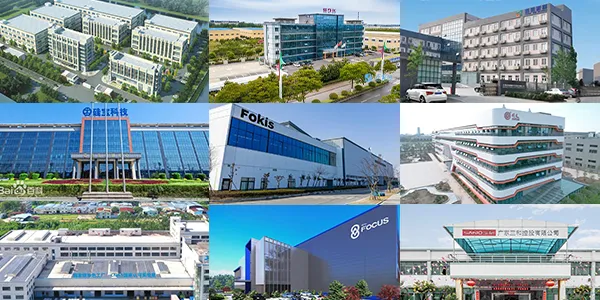
This 2026 guide brings together 10 Chinese adhesive manufacturers with different strengths. We looked at their product focus, manufacturing scale, technical capabilities, application experience, public company information, and relevance to overseas industrial buyers.
The list is not ranked from best to worst. The right supplier depends much more on your application than on company size.
Quick Comparison of Chinese Adhesive Manufacturers
| Manufacturer | Best For | Main Adhesive Focus | Reported Scale / Footprint | Key Strength |
|---|---|---|---|---|
| Kangda New Materials | Wind power & structural bonding | Epoxy, PU, acrylic, SBS, water-based, hot melt | 270,000+ t adhesive output in 2025 | Large-scale engineering adhesives |
| Fokis New Materials | Customized industrial bonding | Solvent-based, water-based, spray & hot melt adhesives | Approx. 30,000 t/year company-reported capacity | Flexible customization & small-batch support |
| Comens New Materials | Flexible packaging & functional materials | PU laminating, PUR, automotive & battery adhesives | Multiple production bases; Qingyuan expansion to 76,000 t/year | Packaging adhesive expertise |
| Tex Year Group | Hot melt & sustainable adhesive applications | EVA, PA, PES, PUR hot melts & instant adhesives | Multi-country manufacturing and service network | Global hot melt supply network |
| Focus Hotmelt | Hygiene & consumer packaging | Specialized hot melt adhesives | Approx. 315,000 t/year designed capacity across China, Poland & Malaysia | Specialized hygiene hot melt expertise |
| Sanvo Chemical | Packaged adhesives, sealants & OEM products | Silicone, synthetic adhesives & aerosols | Approx. 65,769 t production output in FY2025 | Brand channels & OEM manufacturing |
| Guibao Technology | Construction, PV & industrial sealing | Silicone, PU, MS, epoxy, acrylic & hot melt | Approx. 370,000 t/year high-end adhesive capacity | Silicone technology & large-scale production |
| Jointas Co., Ltd. | Construction & industrial sealing | Silicone, PU, epoxy & industrial coatings | Approx. 175,740 t/year designed adhesive capacity | Broad construction-to-industrial coverage |
| Huitian New Materials | Automotive, electronics, PV & batteries | Silicone, PU, acrylic, epoxy & specialty adhesives | 362,000+ t/year across two major adhesive categories | Broad engineering adhesive platform |
| SDK New Material | Electronics, displays & optical materials | OCA, PSA tapes & functional adhesive films | Approx. 638.2 million m² production in 2025 | Precision coating & electronic adhesives |
How We Selected the Companies
We mainly relied on corporate annual reports, official disclosures, company websites, publicly available industry information, manufacturing data, and product portfolios.
For buyers, however, company size is only part of the picture. We also paid attention to practical factors such as application experience, technical support, customization capability, export experience, and whether the manufacturer has a clear advantage in a particular adhesive category.
Editorial Disclosure
Fokis New Materials publishes this article and is also included in the list.
To make that relationship clear, Fokis is evaluated using the same general criteria as the other manufacturers. Wherever possible, factual claims about the companies are supported by publicly available sources.
Kangda New Materials 康达新材

Kangda New Materials is one of the larger engineering adhesive companies on this list. The company is listed in Shenzhen and has expanded beyond adhesives into specialty resins, electronic materials, and other advanced material businesses.
Its adhesive portfolio is broad: epoxy structural adhesives, polyurethane systems, acrylic adhesives, SBS adhesives, water-based products, hot melts, solvent-free laminating adhesives, and electronic adhesives.
Wind power is one of the areas where Kangda has built particularly strong experience. Its structural adhesives and resins are used in demanding applications where bonding strength, durability, and consistency matter more than simply finding the lowest-cost product.
In 2025, the company reported adhesive production of more than 270,000 tonnes, together with more than 50,000 tonnes of epoxy resin products.[1]
A good fit for: wind power, structural bonding, automotive, electronics, and large industrial projects where production scale and engineering capability are important.
Fokis New Materials 科奇新材
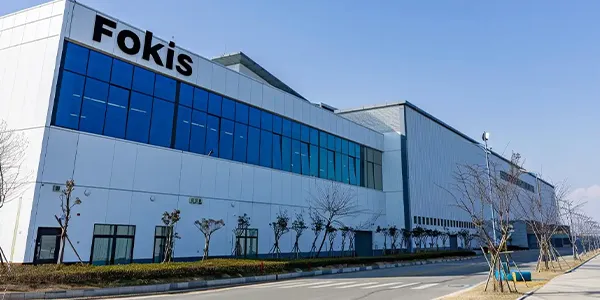
Fokis is much smaller than several listed companies in this guide, but that is also part of its positioning.
Rather than competing mainly on scale, the company focuses on customized industrial bonding problems. Its product range includes solvent-based adhesives, water-based adhesives, spray adhesives, woodworking adhesives, hot melts, and other application-specific formulations.
For a buyer who already knows exactly which standard adhesive grade is needed, a very large manufacturer may be the obvious choice. Fokis becomes more relevant when the application is less straightforward — for example, when substrates are difficult to bond, an existing adhesive is unstable on the production line, or a customer needs formulation adjustments and relatively small trial quantities.
The company reports annual production capacity of about 30,000 tonnes.[2]
A good fit for: manufacturers looking for flexible customization, sample testing, smaller initial orders, and closer technical communication.
Comens New Materials 高盟新材

Comens started in 1999 and built much of its reputation around polyurethane adhesives for flexible packaging.
That remains an important part of the business, but the company today is much broader. Its products now reach automotive interiors, batteries, electrical applications, photovoltaics, woodworking, coatings, and optical materials.
The product portfolio includes solvent-free laminating adhesives, water-based polyurethane adhesives, PUR hot melts, automotive adhesives, battery adhesives, electrical insulation materials, and optical adhesive products.
Comens currently operates production bases in Beijing, Nantong, Wuhan, and Qingyuan. One of its major expansion projects is designed to increase Qingyuan Bet’s annual capacity from 10,030 tonnes to 76,000 tonnes.[3]
What makes Comens particularly interesting is that it combines long experience in flexible packaging with newer functional-material applications rather than relying on only one end market.
A good fit for: flexible packaging converters, polyurethane adhesive users, automotive interiors, batteries, and electrical applications.
Tex Year Group (China) 德渊集团
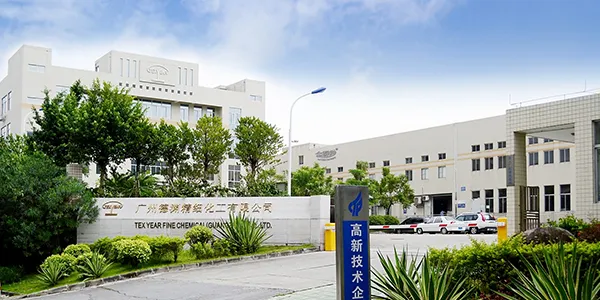
Tex Year has been involved in adhesives since 1976 and is one of the more internationally distributed companies in this guide.
Its strongest area is hot melt technology. The group works with EVA, PA, PES, PUR and other hot melt systems, along with instant adhesives and specialty chemical products.
The company also has manufacturing and service operations outside mainland China, including other parts of Asia and Europe. That makes Tex Year somewhat different from manufacturers whose production and support networks are concentrated mainly in China.
In recent years, it has also placed greater emphasis on lower-carbon materials and more environmentally friendly adhesive technologies.[4]
A good fit for: hot melt applications, hygiene products, packaging, footwear, automotive applications, and buyers who value a wider regional supply network.
Focus Hotmelt 聚胶新材

Focus Hotmelt is much easier to understand than many diversified chemical companies: hot melt adhesives are its core business.
The company is particularly strong in hygiene applications such as baby diapers, feminine hygiene products, adult incontinence products, and related disposable products. It also supplies adhesives for labels, tapes, and consumer packaging.
Its production footprint has expanded significantly. By the end of 2025, designed capacity included about 74,000 tonnes at the Xiancun factory, 120,000 tonnes at the Guangzhou headquarters factory, 61,000 tonnes in Poland, and 60,000 tonnes in Malaysia — roughly 315,000 tonnes in total.[5]
The Malaysian plant reached its planned usable condition in Q4 2025. During the first half of 2026, customer qualification and production transfer were still under way, so the plant was still in the ramp-up stage.[11]
For international hygiene-product manufacturers, this geographic footprint may be just as important as the product itself because it gives Focus more options for localized supply.
A good fit for: hygiene products and other high-volume hot melt applications.
Sanvo Chemical 三和精化
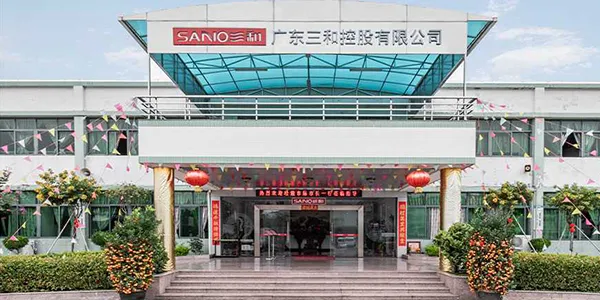
Sanvo is a slightly different type of company from most names on this list.
It is not purely an industrial adhesive specialist. The group sells silicone adhesives and sealants, synthetic adhesives, aerosol products, coatings, automotive-maintenance chemicals, oils, and other packaged chemical products.
That makes Sanvo particularly relevant to buyers looking for branded retail products, hardware and building-material channels, or OEM/private-label manufacturing rather than only highly engineered factory adhesives.
The company reported total production output of approximately 65,769 tonnes in FY2025.[6]
Its long-established SANVO and FullTeam brands, combined with OEM capability, are arguably more important to its competitive position than a single adhesive technology.
A good fit for: packaged adhesives, silicone sealants, aerosol products, automotive-maintenance chemicals, OEM and private-label products.
Guibao Technology 硅宝科技
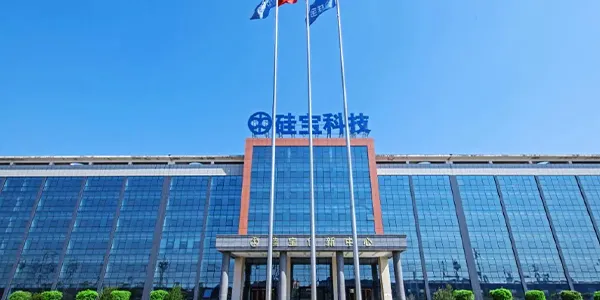
If your application involves silicone sealants, Guibao is one of the companies that deserves close attention.
The company built its business around construction sealants, but it has gradually expanded into photovoltaics, power batteries, electronics, automotive manufacturing, electrical engineering, hot melts, and other industrial applications.
Its technology portfolio now includes silicone, polyurethane, MS polymer, epoxy, acrylic, and hot melt systems.
Guibao reports approximately 370,000 tonnes of annual high-end adhesive capacity across nine production bases. Actual production in 2025 was about 298,270 tonnes.[7]
The scale is significant, but what matters more is that Guibao has developed experience across both traditional construction sealing and newer industrial applications.
A good fit for: curtain walls, insulating glass, doors and windows, photovoltaics, electronics, batteries, automotive applications, and industrial sealing.
Jointas Co., Ltd. 集泰股份
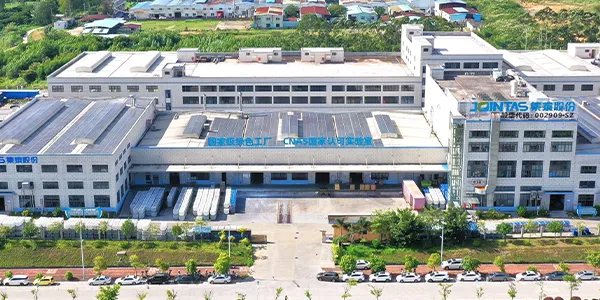
Jointas sits at the intersection of construction sealants and industrial adhesives.
Its ANTAS brand is well established in construction-related applications, while the company’s industrial business now covers containers, electric vehicles, batteries, energy storage, photovoltaics, electronics, transportation, and other manufacturing sectors.
Products include silicone sealants, polyurethane structural adhesives, automotive and EV adhesives, battery and energy-storage materials, photovoltaic sealants, electronic adhesives, and industrial coatings.
The company reports designed annual adhesive capacity of approximately 175,740 tonnes: 93,800 tonnes for construction adhesives and 81,940 tonnes for industrial adhesives.[8]
For buyers, Jointas is interesting because it is not dependent on a single narrow application. It has experience on both the building-material side and the industrial-manufacturing side of the adhesive market.
A good fit for: construction sealing, containers, electric vehicles, energy storage, photovoltaics, electronics, and industrial coating projects.
Huitian New Materials 回天新材
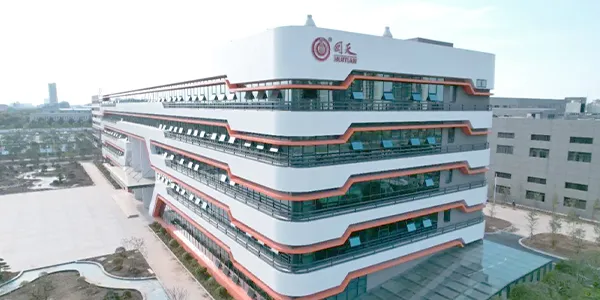
Huitian has been working with engineering adhesives for more than 40 years and today has one of the broadest product portfolios among Chinese adhesive manufacturers.
Its technologies include silicone, polyurethane, acrylic, anaerobic, epoxy, hot melt, electronic, battery, photovoltaic, automotive, and flexible-packaging adhesive systems.
What makes Huitian worth watching is how its business has evolved. Photovoltaics remain important, but automotive and electronics have become increasingly significant parts of the company’s growth.
The company reports designed annual capacity of about 263,400 tonnes for silicone adhesives and 99,000 tonnes for polyurethane adhesives. Those two categories alone add up to more than 362,000 tonnes per year.[9]
That combination of scale and technology breadth makes Huitian particularly relevant to larger industrial manufacturers that use several types of adhesives across different production lines.
A good fit for: automotive, electronics, photovoltaics, lithium batteries, flexible packaging, and large engineering adhesive projects.
SDK New Material 斯迪克新材料
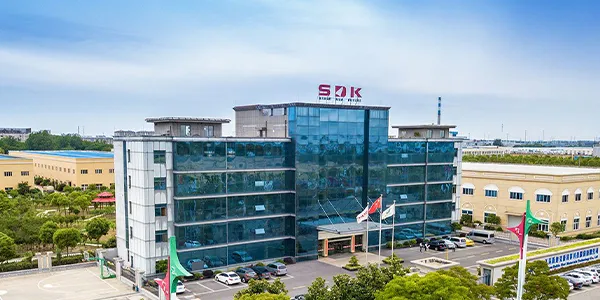
It is not primarily competing in bulk liquid adhesives. Its strength lies in electronic-grade adhesives, pressure-sensitive materials, optical adhesives, and precision-coated functional films.
Products include OCA optical adhesives, ultra-thin double-sided tapes, conductive and shielding tapes, insulating materials, automotive display films, protective films, release films, battery-related adhesive materials, and thermal-management composites.
Because of the nature of these products, measuring SDK simply in tonnes would be misleading. In 2025, combined production of functional film materials and electronic-grade adhesive materials reached about 638.20 million square metres.[10]
The company has also built capabilities across adhesive formulation, base films, release films, precision coating, converting, laminated modules, and testing. That vertical integration matters in electronics, where small changes in coating quality or material cleanliness can have a large effect on performance.
A good fit for: consumer electronics, optical displays, automotive displays, flexible electronics, and applications requiring precision adhesive films rather than conventional liquid adhesives.
How to Choose an Adhesive Manufacturer in China
Finding a manufacturer is easy. Finding one that works reliably with your production process takes a little more work.
Here are the things we would check before placing a serious order.
Start with your application, not the supplier’s size
Before comparing factories, define what actually needs to be bonded.
What are the substrates? What temperatures will the finished product see? Does the adhesive need to resist water, plasticizers, oils, UV exposure, or ageing? How fast is the production line?
These questions usually narrow the supplier list much faster than comparing company turnover or factory size.
Test the adhesive on your actual materials
A technical data sheet is only a starting point.
The same adhesive can behave differently when substrate treatment, coating weight, humidity, temperature, curing conditions, or production speed changes.
For industrial applications, sample testing on the actual production materials is usually worth the time.
Ask about batch consistency
A product that works well once is not enough.
Ask how the manufacturer controls raw materials, production parameters, finished-product testing, formulation changes, and batch traceability.
If your factory runs continuously, consistency is often more valuable than saving a few cents per kilogram.
Check the certificates that actually matter
Do not stop at the phrase “our products are certified.”
Ask for documents related to the exact adhesive grade you plan to purchase.
Depending on the market and application, that may include REACH, RoHS, VOC requirements, food-contact regulations, fire standards, automotive quality systems, or country-specific import requirements.
Pay attention to technical support
For a simple packaging or assembly application, price and delivery may be the main issues.
For a difficult bonding problem, the quality of technical communication can matter much more.
Can the supplier test your materials? Can it adjust the formulation? How quickly does the technical team respond when something goes wrong on the production line?
That is where a smaller specialist can sometimes outperform a much larger manufacturer.
Fokis support
FAQ: Choosing Adhesive Manufacturers in China
Why doesn’t this list include multinational companies such as 3M?
This edition is intended mainly for buyers comparing China-based and regional manufacturers with substantial production and technical operations serving the Chinese manufacturing supply chain. Large multinational brands such as 3M therefore fall outside the scope of this particular list, even though they have manufacturing and commercial operations in China.
Is this list ranked from best to worst?
No. There is no single “best” adhesive manufacturer for every application. A company that is very strong in photovoltaic silicone may not be the right supplier for woodworking spray adhesive, flexible packaging, hygiene hot melts, or optical electronics. The companies are included because they represent different strengths within the Chinese adhesive industry.
How were the manufacturers selected?
The list was prepared based on publicly available information, including backend data analysis from Alibaba's "Business Advisor" for Chinese merchants, internal data from the China Adhesive and Tape Industry Association, company websites, corporate reports, industry information, market reputation, product focus, export experience, and feedback from buyers. We also considered factors such as production capacity, technical support, product consistency, and the company’s position in its main adhesive segment.
What should an overseas buyer check before choosing a supplier?
At a minimum, check the supplier’s experience with your application, quality-control system, technical documentation, production capacity, lead time, sample support, certifications, export experience, and ability to troubleshoot problems.
Should I request samples first?
In most industrial applications, yes. A sample trial can reveal issues that are impossible to judge from a TDS alone, including initial tack, drying speed, open time, coating compatibility, curing behavior, ageing, heat resistance, and line-speed suitability.
Are larger adhesive companies always safer?
Not necessarily. Large manufacturers usually offer greater capacity and more established systems. Smaller specialists may respond faster, accept smaller orders, and be more willing to modify a product. The better choice depends on what you are actually trying to manufacture.
Conclusion
There is no shortage of adhesive manufacturers in China, but they are not interchangeable.
Kangda and Huitian stand out for large-scale engineering adhesives. Guibao and Jointas have strong sealing and construction backgrounds. Focus and Tex Year are more specialized in hot melts. Comens has deep experience in polyurethane and flexible packaging. SDK occupies a very different position in electronics and functional adhesive films. Sanvo is stronger in packaged chemical products and OEM manufacturing, while Fokis focuses more heavily on flexible customization and technical support for industrial bonding problems.
For buyers, the practical question is therefore not simply:
“Who is the biggest adhesive manufacturer in China?”
A better question is:
“Which manufacturer has already solved a bonding problem similar to mine?”
That is usually where a productive supplier search begins.
This guide will continue to be updated as manufacturers release new information about their products, production capacity, technology, and market development.
If you have reliable information that could improve or correct this list, you are welcome to contact the Fokis editorial team.
References / Data Sources:
- [1] Kangda New Materials 2025 Annual Financial Report.↩︎
- [2] KOMPASS↩︎
- [3] Comens New Materials 2025 Annual Financial Report.↩︎
- [4] Tex Year Group 2025 Annual Financial Report.↩︎
- [5] Focus Hotmelt 2025 Annual Report.↩︎
- [6] SANVO Fine Chemicals Group Limited 2025 Annual Report.↩︎
- [7] Guibao Technology 2025 Annual Report.↩︎
- [8] Jointas Co., Ltd. 2025 Annual Report.↩︎
- [9] Huitian New Materials 2025 Annual Report.↩︎
- [10] SDK (Jiangsu Sidike New Materials Science & Technology Co., Ltd.) 2025 Annual Report.↩︎
- [11] Focus Hotmelt 2026 Half-Year Report.↩︎