
Written by Fokis Editorial Team
Published: Oct. 2026 | Updated: Oct. 2026
For upholstered furniture manufacturers, choosing between water-based and solvent-based spray adhesive comes down to three practical questions: how much adhesive each job uses, how quickly the parts can move through production, and how the finished upholstery performs.
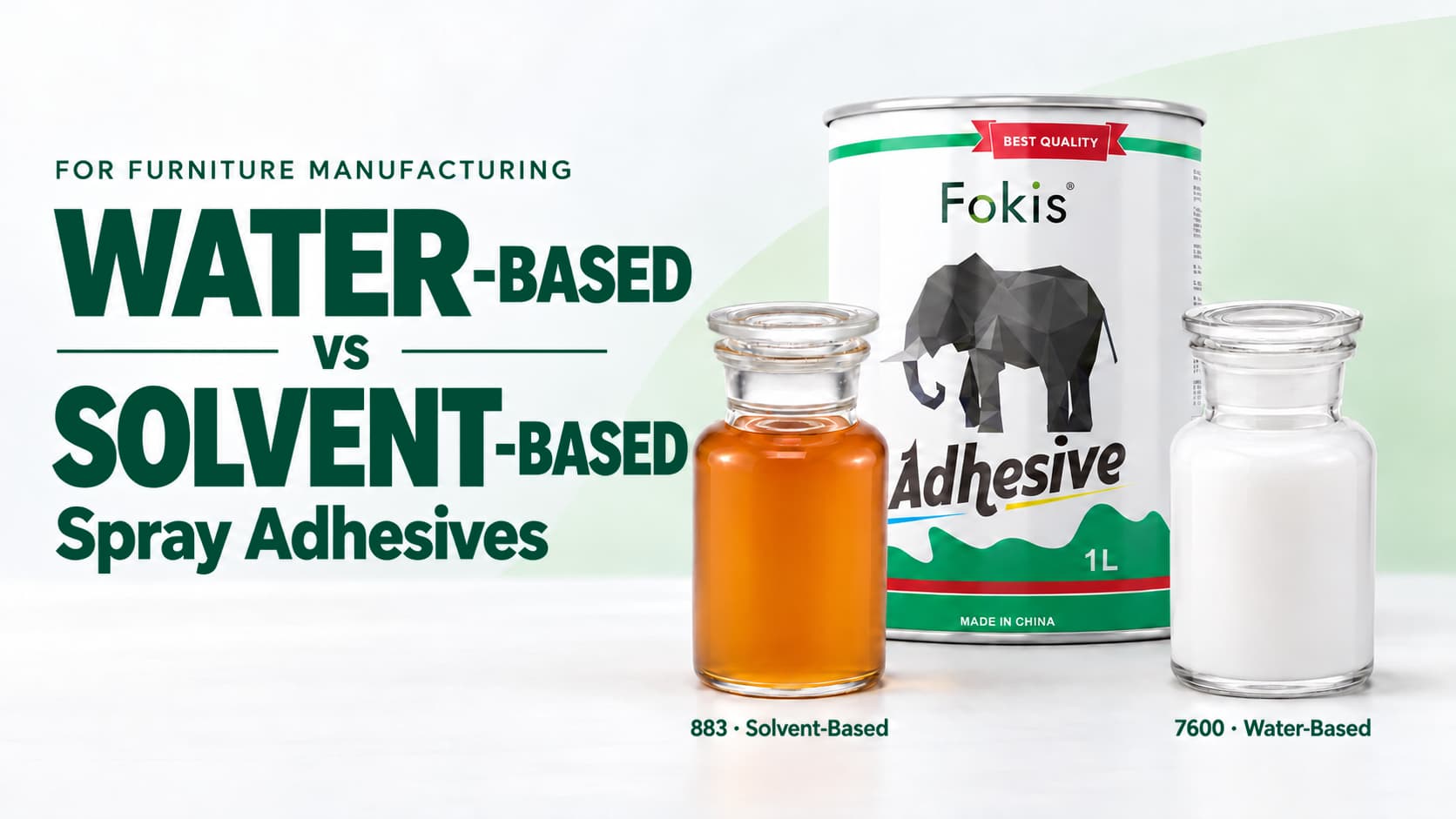
Fokis 883 offered shorter drying times in the comparison below. Fokis 7600 used less adhesive by weight in the supplied reference figures, making it worth evaluating where material consumption and solvent odour are priorities.
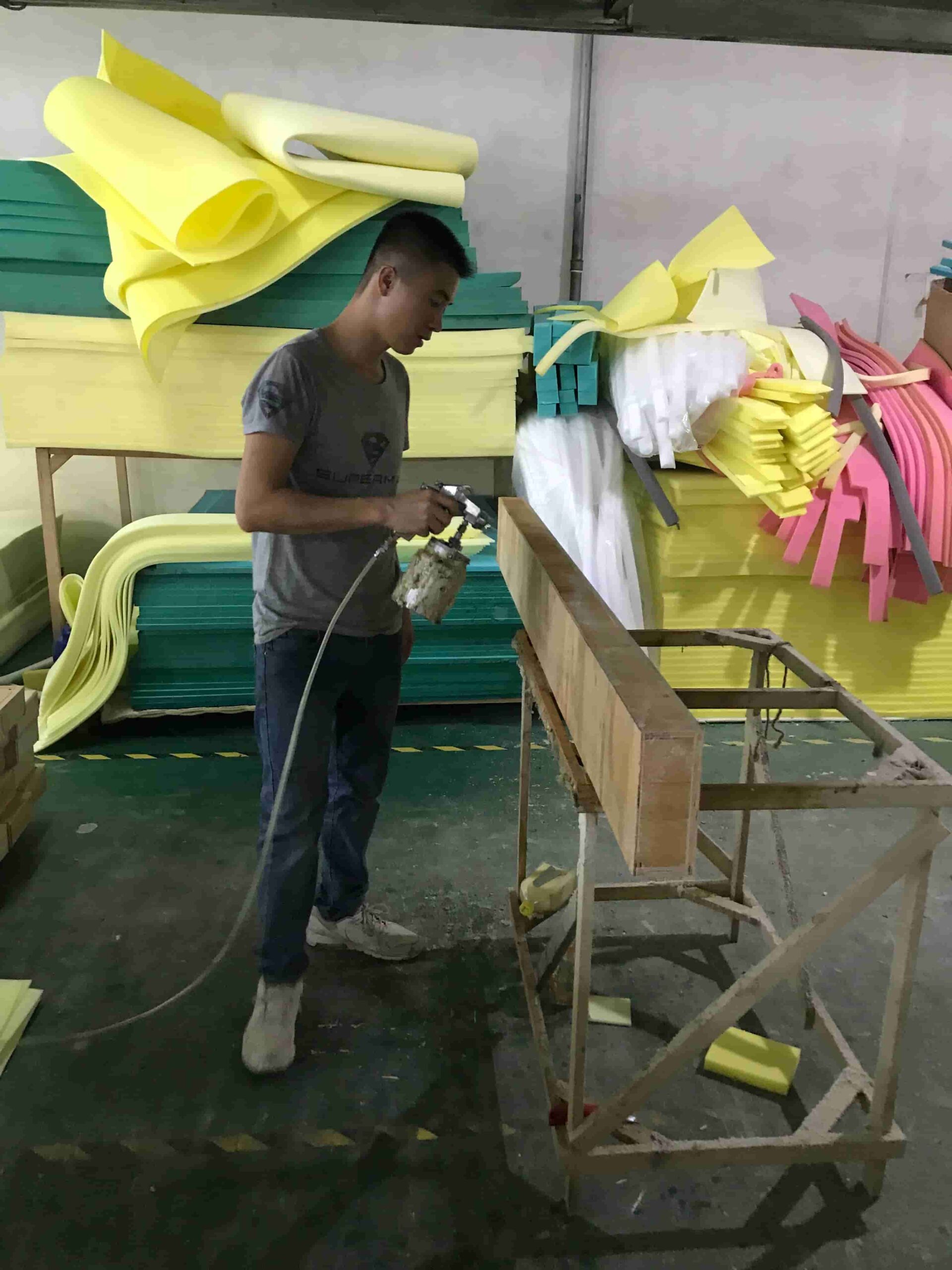
This guide focuses on spray bonding for upholstery work involving foam, fabric and leather.
Fokis 883 vs 7600: a comparison at 25 °C / 50% RH
Fokis supplied the following comparison for 883 solvent-based spray adhesive and 7600 water-based spray adhesive. Both were applied to both bonding surfaces.
| Recorded item | Fokis 883 Solvent-based |
Fokis 7600 Water-based |
|---|---|---|
| Reference adhesive use per 100 m²* | 12 kg | 4 kg |
| Drying time: PVC leather | About 1 minute | 3–4 minutes |
| Drying time: thick leather | 2–3 minutes | 3–4 minutes |
| Bonding window after drying | Within 30 minutes | Within 30 minutes |
| Reported time to maximum pull strength | About 4 hours | About 48 hours |
Swipe horizontally to view the full table.
Reference conditions: 25 °C and 50% relative humidity. These figures apply to the supplied comparison. The area-counting basis for consumption needs confirmation before use in a production quotation. Substrates, application amount, equipment and airflow can change results.
What does the adhesive actually cost per job?
A higher price per kilogram can still produce a lower adhesive bill if the application uses less material.
Using the reference consumption above, adhesive-only cost per 100 m² would be:
- 883: 12 × its price per kilogram.
- 7600: 4 × its price per kilogram.
If your trial reproduces those usage figures on the same area basis and meets the same bonding requirements, 7600 breaks even at three times the per-kilogram price of 883. Below that price ratio, its adhesive-only cost would be lower.
Then account for spray losses, labour, drying energy, equipment changes and rework. The useful comparison is the cost of producing acceptable furniture parts.
Fit the drying time to your production line
For the tested PVC leather, the drying interval increased from about one minute with 883 to three or four minutes with 7600. Check whether your workstation has room for that interval before changing adhesive.
The recorded 48 hours for 7600 describes the time to maximum pull strength. It does not establish a 48-hour wait before every following operation. Set separate acceptance checks for moving, trimming and packing the bonded parts.
These timings also do not establish which adhesive has the higher final strength: no numerical strength results are included in this comparison.
Repeat the trial under your actual factory temperature and humidity, using suitable spray equipment and controlled application amounts. High humidity can slow water evaporation. Fast-grab water-based grades also exist, so drying and handling behaviour must be checked for the specific formulation.
Check the fabric, foam and product documentation
For factories seeking to reduce solvent odour, 7600 is a candidate for a production trial. Assess it on your actual materials for adhesive bleed-through, colour changes, a stiff glue line, foam surface changes and bond durability.
Review the current product Safety Data Sheet and relevant VOC test documentation. A water-based label alone does not establish zero VOC content or finished-furniture compliance. Spray ventilation and handling measures should follow the specific product's requirements.
Which should your factory trial first?
Start with 883 when the shorter drying window shown here is important and the product meets your material, workplace and customer requirements.
Start with 7600 when reducing solvent odour and adhesive consumption is a priority, and you can validate the spray setup, drying interval and packing schedule.
Choose one representative furniture component. Measure adhesive use, waiting time, bond performance and rejected parts under normal production conditions.
Contact Fokis with your foam, fabric or leather specifications, factory temperature and humidity, current adhesive consumption and required handling time. These details help us discuss a suitable 883 or 7600 trial for your production line.