
Test dates: November 18–19, 2026
Prepared by Fokis Editorial Team
Reviewed by Chrisor Luo (Fokis Senior Product Manager)
How well does a water-based footwear adhesive hold two pieces of soft PVC together? In a Fokis lab test, a sample bonded with 8805-H without added hardener reached at least 9.5 N/mm in peel strength. The material on both sides of the joint was 1.5 mm soft PVC.
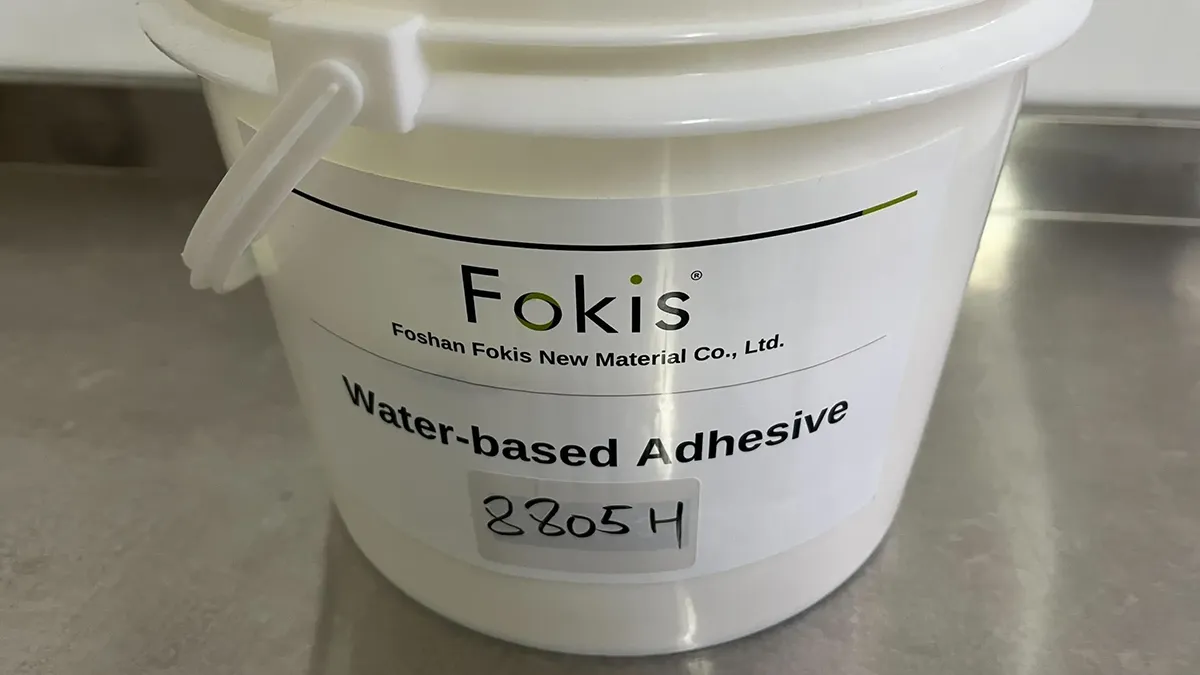
8805-H is a custom version of Fokis 8805 water-based PU adhesive. The H formulation is a two-component system for footwear bonding. Its base is a waterborne polyurethane dispersion with 38% solids, paired with a water-dispersible polyisocyanate hardener.
How we measured peel strength on soft PVC
We cut the PVC into 250 × 300 mm sheets, wiped the bonding surfaces with acetone and applied 8805-H with a glass rod. After drying the coating under an infrared lamp, we pressed the sheets together at about 65°C and cut the bonded material into strips.
We tested the strips on a universal tensile testing machine at 100 ± 10 mm/min. We measured initial strength after 2 minutes and tested again after 24 hours. The test record gives one peel result for the sample without hardener and does not identify which time point it came from.
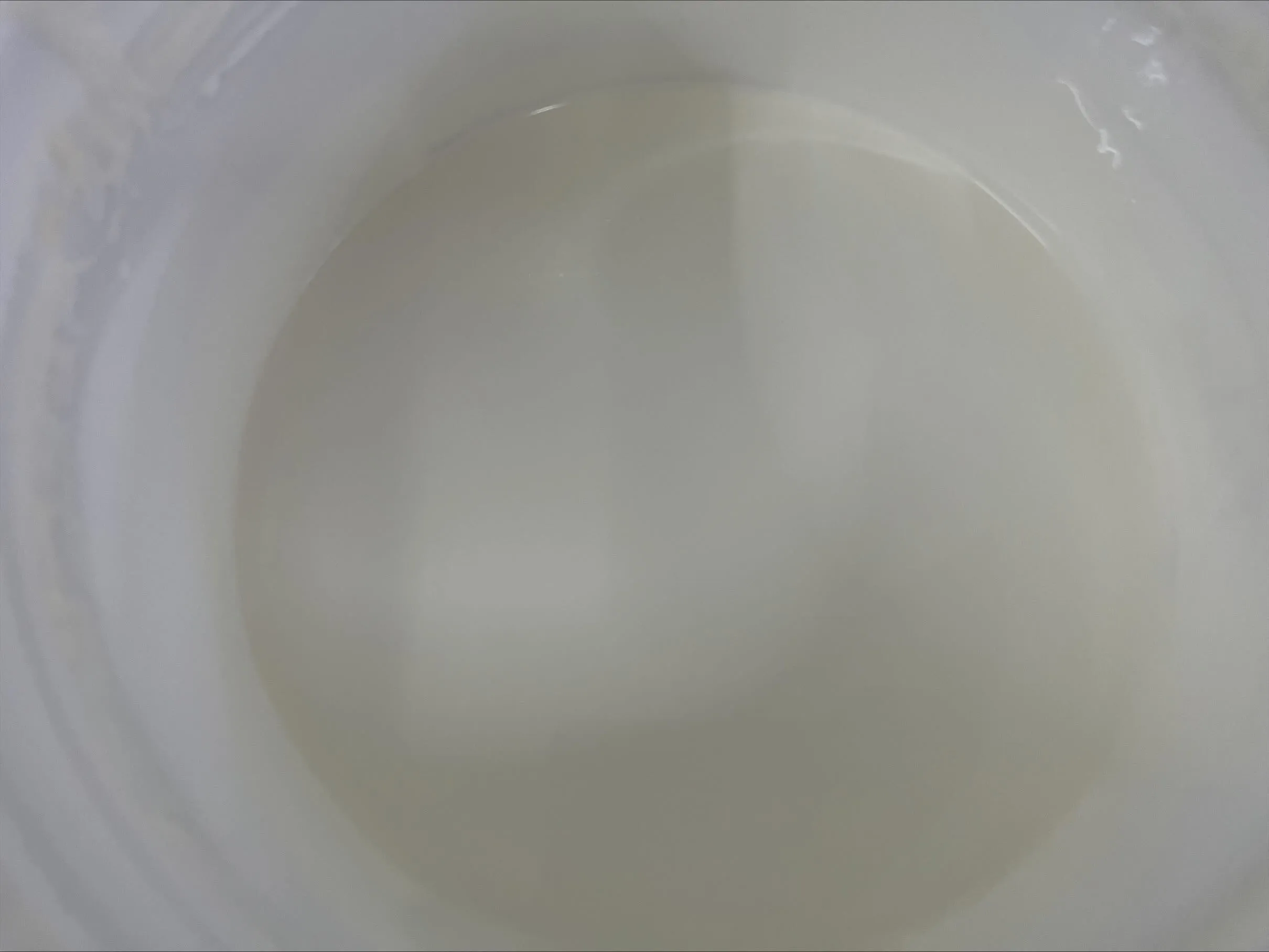
Milky white Fokis 8805 H product real-life close-up
Heat activation and heat resistance
| Test | What we observed |
|---|---|
| Heat activation | We held strips in a preheated oven for 1 hour, touched them together with light finger pressure and checked how readily they separated. The observed activation range was 58–78°C. |
| Effect of activation temperature | At an activation temperature of 78°C, bond strength was about 1.8 times the value at 40°C. |
| Heat resistance under load | We hung a 1 kg weight from a T-shaped specimen and checked for separation after 1 hour at each of five temperatures from 80 to 120°C in 10°C steps. The highest temperature at which the joint stayed bonded was 110°C. |
Planning a trial on your outsole
If your outsole is PVC and your upper is coated fabric, the adhesive meets a different surface on each side. Send Fokis a piece of each material, mark the bonding faces and tell us how soon after pressing the shoe moves to the next operation. We can use that handling time to plan an early peel check alongside the 24-hour measurement. See our footwear adhesive guide for other sole and upper combinations, or check how to prepare material samples for testing.